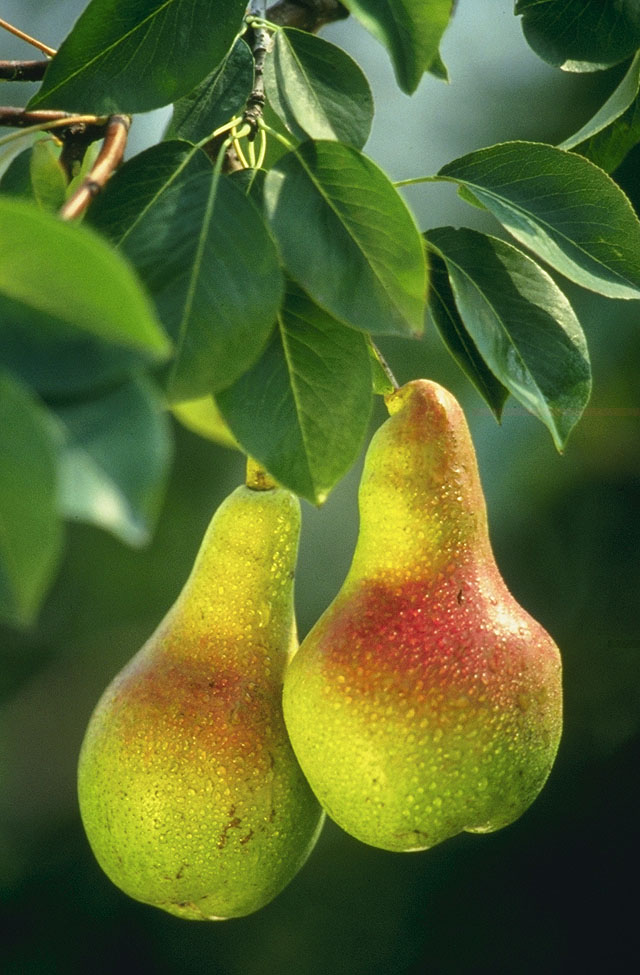
How to Grow Pears
Pyrus communis
Forgiving, long-lived orchard trees that ripen best off the branch.
By the Plants by Zone Editorial Team · Reviewed June 1, 2026
About pears
Pears are reliable, disease-tolerant orchard trees that, like apples, generally need a second variety for cross-pollination. Their quirk is harvest: European pears must be picked mature-but-firm and ripened off the tree, or they turn gritty inside. Once established they crop heavily for decades.
When to plant and harvest pears
Timing is relative to your frost dates. Find your USDA zone for exact dates, or browse the month-by-month calendars.
Start seeds indoors
Not applicable — plant a grafted tree
Transplant outdoors
Late winter to early spring while dormant
Direct sow
Not applicable
Harvest
Late summer into fall
Free planting calendar
Put pears on your own planting calendar
Pick your zone, and we'll build a month-by-month sow, transplant & harvest chart with pears already on it — print it or save it as a PDF.
Free · no signup needed
How to grow pears step by step
- 1
Plant two compatible varieties for cross-pollination, dormant, in late winter or early spring.
- 2
Keep the graft union above soil and train a strong central leader.
- 3
Prune yearly while dormant, but more lightly than apples — pears are prone to watersprouts.
- 4
Water steadily as fruit develops.
- 5
Watch for fire blight; prune out blackened "shepherd’s crook" shoots well below the damage.
- 6
Pick European pears firm and ripen them indoors.
Common problems growing pears
⚠ Pears go gritty or rot at the core
European pears ripen from the inside out — pick them mature but firm and ripen off the tree at room temperature.
⚠ Blackened, wilted shoot tips (fire blight)
Prune out affected wood well below the damage, sterilizing tools between cuts, and choose resistant varieties.
⚠ Little fruit set
Plant a second compatible pear variety nearby for cross-pollination.
✓ Good companions for pears
✗ Keep away from
🧺 Harvesting pears
Pick European pears when they reach full size and the skin lightens but the flesh is still firm, then ripen them at room temperature until the neck yields to gentle pressure. Asian pears, by contrast, ripen on the tree and are picked ready to eat.
Pears: frequently asked questions
When should you plant pears?+
In most regions you transplant late winter to early spring while dormant. Timing is relative to your last frost, so find your USDA hardiness zone for the exact planting dates where you live.
Why are my pears hard and gritty?+
European pears must be picked firm and ripened off the tree — left to ripen on the branch they turn mealy and gritty at the core.
Do pear trees need a pollinator?+
Most do — plant a second compatible variety that blooms at the same time for good fruit set.
Sources & review
Written and maintained by the Plants by Zone Editorial Team. Planting times are based on USDA hardiness zones and NOAA frost-date normals, with care guidance drawn from Cooperative Extension sources. Last reviewed June 1, 2026.
USDA Plant Hardiness Zone MapNOAA U.S. climate normalsCooperative Extension
Grow pears in your zone
See exactly when to plant and what else to grow alongside pears, tailored to your USDA hardiness zone.


