
When to Start Seeds Indoors in Zone 10
Your month-by-month seed-starting calendar, timed to a last frost around Rare or none.
- Min Winter Temp
- 30 to 40 °F / -1 to 4 °C
- Last Spring Frost
- Rare or none
- First Fall Frost
- Rare — December to January in coldest years
- Growing Season
- Year-round (365 days)
- Annual Rainfall
- 15–65 in
Seed starting in Zone 10
Starting seeds indoors gives heat-loving crops the head start they need to ripen within Zone 10's season. Because everything is timed to your last spring frost — around Rare or none in Zone 10 — the calendar below shows exactly which month to start each crop. Count back from your transplant date, sow under bright light, and harden seedlings off before they go outside.
Zone 10 seed-starting calendar
January
All January tasks →Start these indoors
Get a jump on the season under lights or on a sunny windowsill so transplants are ready when the weather warms.

Sow ¼ in deep in cell trays; keep at 70–75°F. Germinates in 7–10 days.

Sow ¼ in deep at 70°F; treat like tomatoes.

Sow ¼ in deep; ready to transplant in 4–6 weeks at 4–5 in tall.

Sow ¼ in deep; harden off well before setting out.

Surface-sow under lights at 70°F; very frost-tender.

Sow ¼ in deep; quick and reliable from seed.

Sow 1 in deep. Germinates in 5–10 days in warm soil.

Sow ¼–½ in deep. Germinates in 5–10 days.

Sow 1/4–1/2 in deep. Germinates in 4–7 days.
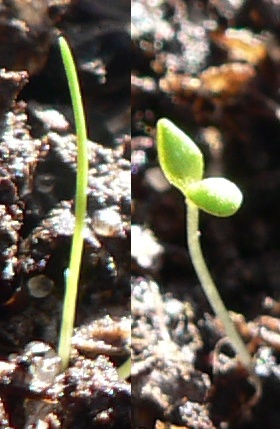
Sow ¼–½ in deep. Germinates in 7–14 days.
Sow ½ in deep. Germinates in 7–14 days.
Sow ¼ in deep. Germinates in 5–14 days.
Sow 1/4 in deep. Germinates in 7–14 days.

Sow ¼–½ in deep. Germinates in 4–7 days.
Sow Surface sow — seeds need light; press gently without covering. Germinates in 7–14 days at 70–75°f.

Sow 1½–2 in deep. Germinates in 7–14 days.

Sow Surface-sow; needs light to germinate — press seed gently into moist soil without covering. Germinates in 7–14 days at 55–70°f.
November
All November tasks →Start these indoors
Get a jump on the season under lights or on a sunny windowsill so transplants are ready when the weather warms.

Sow seed on the surface or barely covered. Germinates in 14–21 days (slow; needs light).
Sow Surface-sow — dust-fine seed needs light to germinate. Germinates in 7–14 days at 70–75°f.
Sow Surface-sow — dust-fine seed needs light to germinate. Germinates in 14–21 days at 70–75°f.
Sow seed on the surface (needs light); transplant at nursery depth. Germinates in 7–14 days at 70–75°f.
Sow Surface-sow seed (needs light); transplant at nursery depth. Germinates in 14–21 days at 70–75°f.
December
All December tasks →Start these indoors
Get a jump on the season under lights or on a sunny windowsill so transplants are ready when the weather warms.

Sow ⅛ in deep at 80°F on a heat mat. Slow to sprout (14–21 days) — start early.

Sow ¼ in deep at 80°F; needs steady warmth for 8 weeks indoors.

Sow ¼ in deep in trays; keep tops trimmed to 3 in for stocky transplants. Choose day-length type for your latitude.

Soak seed overnight; slow to germinate (3 weeks). Surface-sow under lights.
Sow ¼ in deep; set transplants at nursery depth. Germinates in 10–21 days at 65–75°f.
Sow ¼ in deep. Germinates in 7–14 days.

Sow Surface sow — needs light. Germinates in 7–14 days.

Sow ¼ in deep. Germinates in 14–21 days.

Sow Surface sow — needs light to germinate. Germinates in 10–14 days.

Sow rooted stalks or divisions at the same depth they were growing. Germinates in 10–14 days from seed at 70°f; grocery-store stalks root in 2–4 weeks in water.
Sow Surface-sow; seed needs light to germinate. Germinates in 10–14 days at 70–75°f.
How to start seeds indoors
- 1
Count back from your last frost. Most warm-season crops start 6–8 weeks before; peppers and eggplant 8–10 weeks.
- 2
Sow into a clean seed-starting mix, at the depth on the packet, and keep it consistently warm (a heat mat speeds germination).
- 3
Give seedlings strong light as soon as they sprout — a sunny window is rarely enough; a shop light a few inches above works well.
- 4
Pot up if seedlings outgrow their cells before it’s warm enough to plant out.
- 5
Harden off over 7–10 days — gradually expose them to outdoor sun and wind — before transplanting after your last frost.
Seed starting in Zone 10: common questions
When should I start seeds indoors in Zone 10?+
In Zone 10, the indoor-sowing months are January, November, and December, timed to a last spring frost around Rare or none. Start the longest-season crops first and quicker crops closer to your transplant date.
What seeds can I start indoors in Zone 10?+
Common crops to start indoors in Zone 10 include Tomatoes, Tomatillos, Broccoli, Cabbage, Basil, Marigolds, Watermelon, Kohlrabi. Warm-season crops like tomatoes and peppers benefit most from an indoor head start.
How many weeks before the last frost should I start seeds in Zone 10?+
It depends on the crop: peppers and eggplant want 8–10 weeks, tomatoes 6–8 weeks, and quicker crops like cucumbers or squash just 3–4 weeks before transplanting. Count back from Zone 10's last frost (around Rare or none) to find each start date.
Zone 10 overview →
Frost dates, climate, and everything to grow here.
Monthly calendars →
What to sow, transplant, and harvest each month.
Plant growing guides →
Full care guides for every crop in the calendar.